


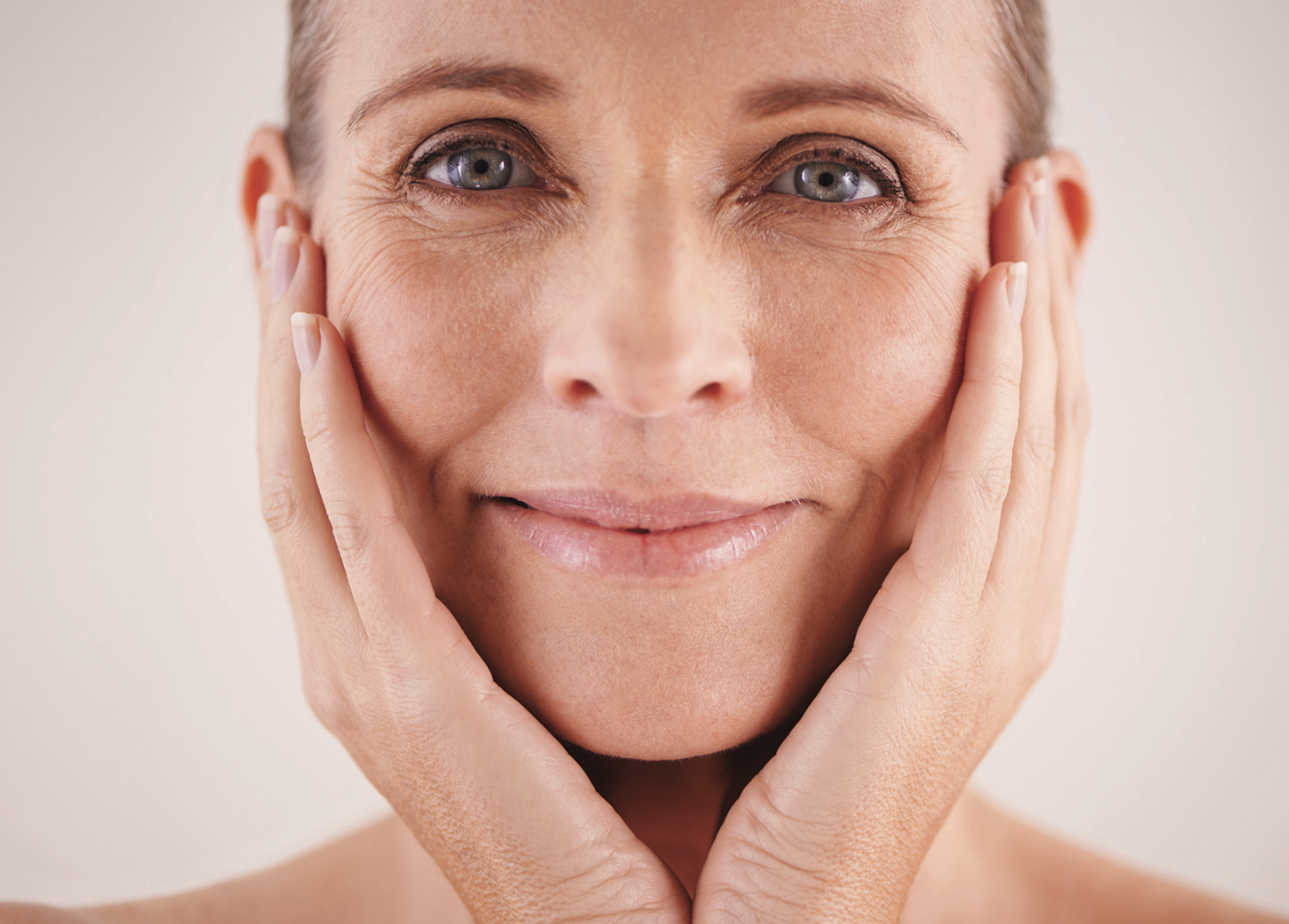
Beyond Botox injections and hyaluronic acid, aesthetic medicine is undergoing a transformation; the goal is to enhance natural beauty gradually—without surgery
By Jessica Dostie
Natural beauty is in style, says Dr. Mirko Gilardino, a plastic surgeon and director of the clinic Le 1620 in Montreal. “More and more patients are choosing treatments that stimulate the production of collagen and rejuvenate the appearance by optimizing a regeneration process rather than masking the effects of aging,” he explains.
“Our patients want to look rested, not different,” says Dr. Roni Munk, a certified aesthetic dermatologist and medical director at the Dermapure clinics in Westmount and Pointe-Claire, Que. Regenerative aesthetics focus more on improving the quality of the skin and restoring volume gradually and subtly. In other words, he says, “we go beyond the simple correction of wrinkles and folds to rejuvenate the skin from the inside out and achieve more overall results.”
Here’s a look at three of these treatments.
1. Exosomes
In demand among many Hollywood stars, including Jennifer Aniston, exosome therapy is presented as an anti-aging innovation that’s a game-changer in the medical-aesthetics industry. First, you need to know that exosomes, which are tiny vesicles (fluid-filled pouches), are naturally secreted by the cells and play a key role in cell communication, tissue regeneration, and inflammation reduction. “They are the future of skin rejuvenation, stimulating an actual repair rather than masking imperfections,” Munk says.
The treatment consists of using exosomes from stem cells (in the form of a topical gel—the injection of exosomes is not approved in Canada) to stimulate aging cells to produce more collagen and elastin. To penetrate deeply and have an effect, the gel must be applied at a clinic after a procedure that creates microinjuries, such as radiofrequency, microneedling, or lasers. A series of two to four sessions should result in a gradual improvement in the skin’s texture and radiance.
2. Platelet-Rich Plasma
A regenerative technology that has proven successful is platelet-rich plasma (PRP). “Of course, exosomes are very much in vogue right now, but I prefer treatments like PRP, which contains not only its own exosomes but also growth factors that augment healing and regeneration effects,” Gilardino says.
This non-invasive medical technique starts with taking a simple blood sample. The sample is placed in a centrifuge, which makes it possible to isolate the plasma that is rich in platelets so it can be reinjected in the target area, whether it’s the face, the hands, or the neckline. The effects—a more radiant complexion and improved skin texture—appear gradually. Most clinics recommend an initial series of three or four treatments, often combined with microneedling, and then annual maintenance sessions.
PRP is also indicated for the scalp in cases of loss of hair density. “It is, by far, the most documented approach, outside of prescribed medical treatments and transplants, for hair,” Gilardino says.
3. Biostimulators
Injections of biostimulators have also proven successful over the past 25 years in restoring the structure of the skin and its elasticity from the inside. “The process is so subtle and gradual that you can’t tell that a person has had injections,” explains Dr. Quynh Nguyen, an ophthalmologist, oculoplastic surgeon, and injector physician at Victoria Park Medispa in Montreal.
Biostimulators are not to be confused with fillers. While fillers restore volume (sometimes too noticeably!), biostimulators address sagging skin and loss of radiance by encouraging the production of collagen and elastin.
The approach is simple: the doctor injects a synthetic substance that, through an inflammatory response, “wakes up” the cells. Following the treatment, you need to massage the product into the skin for five minutes five times a day for five days. “The results are cumulative,” Nguyen says. “Often, we recommend three sessions to achieve an optimal effect after six months.”
She especially recommends this technique, known by the brand names Sculptra or Radiesse, if you notice slack skin, in particular after a major weight loss, or to rectify a lack of volume.
Some Downsides
While these technologies require almost no recuperation time—though they may cause one or two bruises or some localized redness—some more serious adverse effects can occur. With exosomes and PRP, infection is possible at the injection site, which is why it’s important to deal only with a qualified physician working in a recognized clinic, Nguyen says.
With biostimulators, nodules can appear, Gilardino says. “Every time you trigger an inflammatory response in the body, there’s a risk of excessive deposits,” he warns.
“These can be serious and require a surgical procedure to remove them.”