


Is there a correct order in which to eat your food? The idea of “ordered eating” is getting lots of buzz these days, but what does science say?
By Isabelle Huot
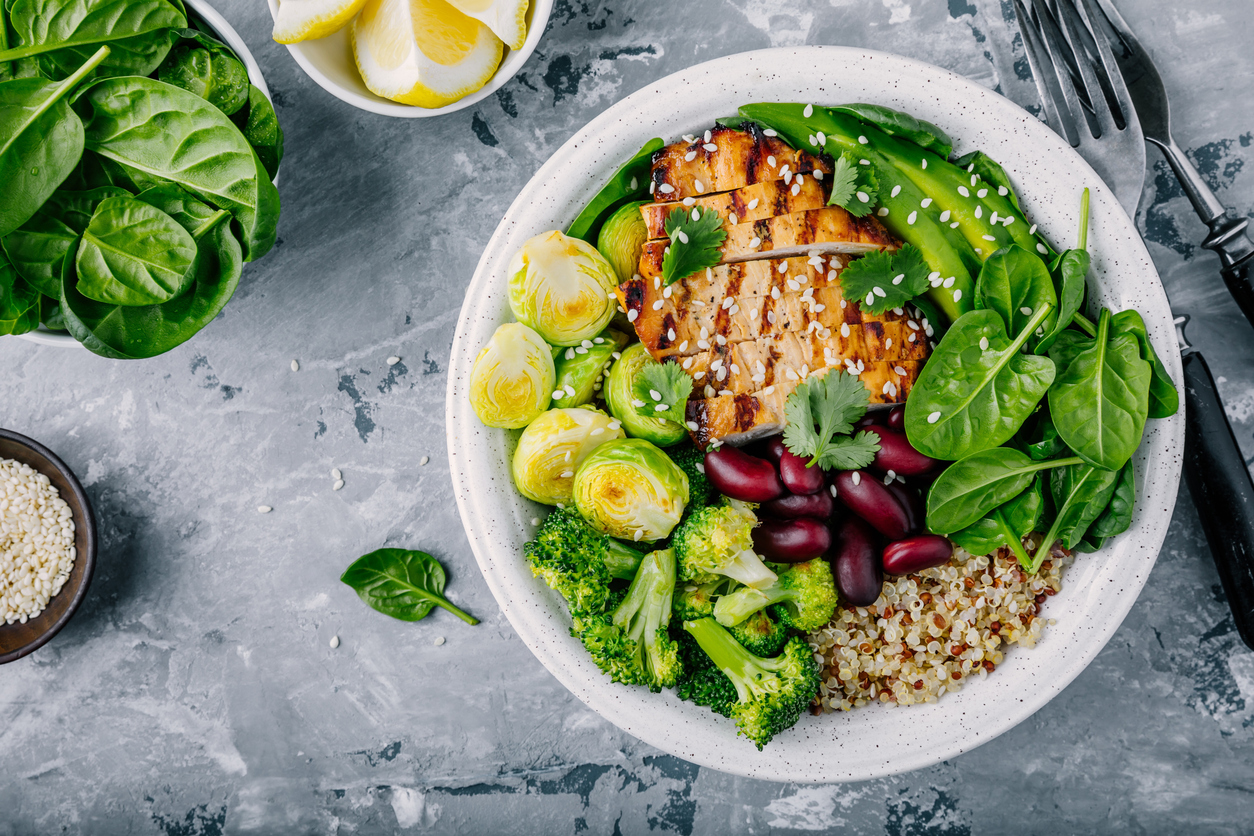
The French author Jessie Inchauspé, a.k.a. the Glucose Goddess, claims that the order in which you eat your food affects your health and energy levels. A biochemist by training, Inchauspé believes that you should start with vegetables, and then eat protein, and finish with carbohydrates. The goal is to avoid spikes in blood sugar, which can lead to cravings and fatigue and, over the long term, promote weight gain.
What Scientists Say
Studies have shown that the order in which foods are eaten can have a significant effect on regulating blood sugar in people with prediabetes or type 2 diabetes.
When carbs are eaten after vegetables and protein, glucose response is weaker and postprandial glycemia (blood sugar levels two hours after a meal) is more stable.
For the general population, some interesting studies have assessed the effects of an identical meal, eaten in a different sequence, on metabolic health markers. Here again, blood sugar was lower when carbs such as bread were eaten last. As a bonus, the hormone GLP-1, which promotes a feeling of fullness, was higher in this scenario.
The scientific data seems to confirm that ordered eating can have a positive effect on blood sugar. For the millions of Canadians living with diabetes, this approach could be an interesting tool to better manage sugar levels day to day.
The usefulness of this approach is debatable for non-diabetics, as regulating blood sugar isn’t a problem for people who have high sensitivity to insulin. However, it can contribute to weight control by slowing down gastric emptying (the evacuation of the stomach contents). The effect is similar to that of new medications for managing diabetes, such as Ozempic, which promote a feeling of fullness. And ordered eating has another benefit: it can prompt people to eat more vegetables, which is important for overall health.
A Few Challenges
Some dishes or occasions can make it harder for people who want to practise ordered eating. It can be difficult to follow the rules at a restaurant or at a friend’s house, for example. Dishes with several different types of ingredients, such as lasagna, paella, or even pizza, also add to the challenge. And some people can become overly rigid when it comes to what they eat, with the risk of developing a food obsession.
Some Guidelines
If the idea of eating foods in a certain order appeals to you, here are a few simple tips to put it into practice.
- In the morning, start with protein (egg, cottage cheese, plain yogourt) before eating fruit and grains.
- Start lunch and dinner with vegetables (salad, raw vegetables, vegetable soup).
- Next, eat protein (meat, poultry, fish, egg, tofu).
- Finish the meal with starches (rice, pasta, bread, potato, crackers).
- At a restaurant, skip the bread served before a meal and have a vegetable appetizer instead.
Isabelle Huot holds a Ph.D. in nutrition.