


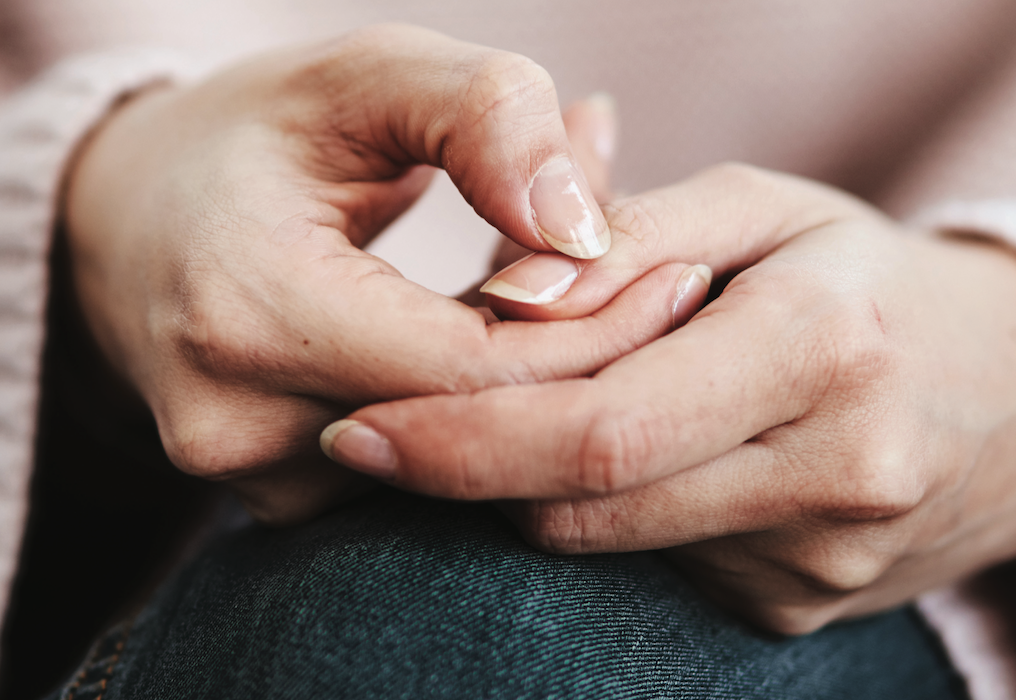
Changes in the colour, shape, or texture of your nails can be a sign of a nutritional deficiency, an infection, an illness, or simply bad habits
By Jacqueline Simoneau
A healthy nail is pink, smooth, shiny, and without blemishes and has a well-defined lunula (the white part of the nail near the cuticle).
A change in how the nail looks doesn’t necessarily indicate a serious problem. “For 80 per cent of people, changes to the nails are due to external causes, such as frequent contact with chemical products or water, shocks, or inadequate care during manicures or pedicures,” says Dr. Julio Jasso-Olivares, a Montreal dermatologist.
But while most changes are harmless, others can be a sign of an underlying condition and shouldn’t be taken hightly.
What to Watch For
Nails that are ridged, convex (bulging), yellow or blackish… All of these, and many others, can be red flags. You need to know how to decipher them.
“For every nail anomaly, there are several—or even dozens of—possible causes,” says Dr. Alexandre Proulx, a general practitioner in Montreal. “We therefore can’t always say that a certain nail problem corresponds to a certain ailment or deficiency based on the appearance only. And different conditions can affect the nails in very similar ways, which complicates the diagnosis.”
Nevertheless, the appearance of the nails can give health professionals valuable information about their patients’ medical condition. The only problem is that most doctors don’t systematically check a patient’s nails at each medical visit. It’s therefore important to thoroughly examine your nails regularly and advise your family doctor of any changes.
According to Proulx, the more proactive you are, the higher your chances of detecting a problem before it becomes serious. The colour, shape, and texture of your nails as well as any abnormalities act as a barometer for various ailments. Here are the most common changes and a brief summary of what they could mean.
Colour
YELLOW. Two bad habits can cause the nails to turn yellow: smoking and applying red or dark nail polish without a base coat. Yellowing can also reveal onychomycosis, which is caused by a fungal infection. According to Jolaine L’Archevêque, president of the Association des infirmières et infirmiers en soins podologiques du Québec (Association of podiatric nurses of Quebec), this infection is more common as we age because of reduced blood circulation in the extremities. It affects the feet more than the hands. More rarely, yellowing of all the nails, known as yellow nail syndrome, can be a sign of a more serious condition, such as psoriasis, lung disease, kidney damage, or lymphedema (accumulation of lymphatic fluid in the tissues).
WHITE. Contrary to popular belief, small white spots on the nail, called leukonychia, aren’t caused by a lack of calcium. “There are several kinds of discoloration,” Proulx notes. “They’re most often caused by microtraumas such as an aggressive manicure or hitting the nail on something. They disappear when the nail grows out.”
By contrast, white colouring can be, among other things, a sign of a fungal infection or a skin problem, such as psoriasis. Nails that are all white, with no lunula and with a narrow brownish band near the tip, may be related to an ailment called Terry’s nails, which can be linked to chronic kidney, heart, intestinal, or liver disease or to an iron or zinc deficiency.
BLUE. “Nails can develop a blue tinge with certain medications, such as minocycline, an antibiotic,” Proulx explains. “This colouring can also be related to circulation disorders or to a lack of oxygen in the blood [cyanosis]. Note that it’s not always the nail that becomes bluish but the tissues below it. A bruise after a trauma can also be to blame, as well as a mole or skin cancer. A clue to the exact cause is whether the problem affects just one nail or several.
BLACK. “Most of the time, a dark spot is due to a bruise caused by a shock or a pinch,” Jasso-Olivares says. “But if a black or brown vertical line appears for no obvious reason, see a doctor as soon as possible. It could be a subungual melanoma, a kind of skin cancer.”
GREEN. Green nail syndrome is a benign infection caused by the pseudonomas bacteria. It generally develops in people who have onycholysis (detaching of the nail) or chronic paronychia (inflammation of the skin around the nail) caused by excessive exposure to water or to cleaning products that irritate the skin.
Texture
RIDGES OR RIPPLES. These surface vertical lines, similar to wrinkles on the skin, can appear as we age. According to L’Archevêque, deep horizontal grooves indicate Beau’s lines—a temporary slowing in the nail’s growth following a trauma, systemic disease, a nutritional deficiency, or chemotherapy. But ridges can also be, among other issues, a symptom of psoriasis, eczema, or inflammatory arthritis.
SPLITTING, THINNING, AND BRITTLENESS. These changes are called onychoschizia. “In most cases, they are linked to nail dryness due to the use of chemical products such as nail polish, nail polish remover, and detergents,” Proulx says. Another enemy of nails, Jasso-Olivares notes, is repeated exposure to water. “Moisture makes nails rough, breakable, and brittle,” he says. “It can also cause splitting.” If symptoms persist, they can hide, for example, hypothyroidism, kidney failure, liver dysfunction, nutrient deficiency, anemia, or skin disease.
Shape
PROTRUDING. “This phenomenon, called nail clubbing, can be hereditary,” Proulx says. “However, if the nails become abnormally protruding in adulthood, that’s more of a concern. They can in particular be a sign of heart or lung problems, some cancers (including lung), or thyroid-gland problems.” This is a symptom that needs to be taken seriously.
INDENTED IN THE MIDDLE. This deformation of the nails is called koilonychia. It can be related to low iron levels (iron deficiency anemia) but is also found in people with a genetic disease called hemochromatosis, which causes too much iron in the blood. It can also be caused by trauma to the nails.
When to See a Doctor
Once external causes have been ruled out, any anomalies in the nails’ appearance require attention. “Recent or persistent changes in colour, shape, or texture, the appearance of lines or dark spots, or changes related to other symptoms such as shortness of breath should lead people to see their doctor,” Jasso-Olivares says.
“If the diagnosis isn’t clear, the doctor can look into the possibility of an underlying systemic disease or refer you to a dermatologist.” All in all, by checking your nails regularly, you can spot certain signs and act quickly—a fairly simple way to monitor your health.